
LEDLITY · ENGINEERING CALCULATION
Design toroidal inductors with traceable engineering.
Design toroidal inductors with controlled core and wire selection, magnetic verification, thermal assessment, and a traceable report.
From target inductance, DC current and ripple to a validated core/wire candidate, Bdc + Bac, winding temperature and an immutable project record.
- AUTO + manualIndependent core and wire validation
- L(I)Current-dependent inductance view
- ThermalBaseline and multilayer comparison
- TraceableSaved HTML and JSON reports
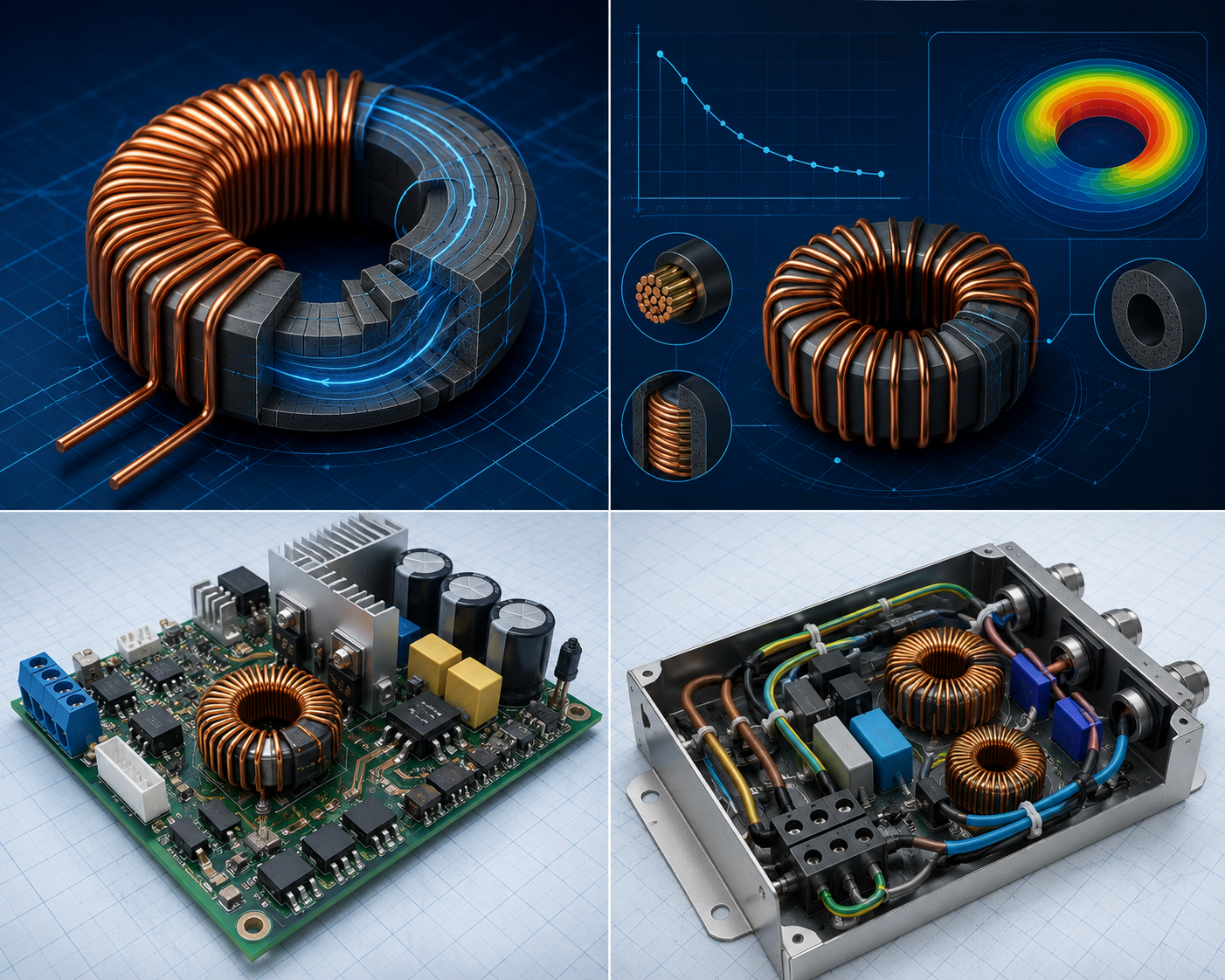
A disciplined calculation workflow
How the Toroidal Inductor Calculator works
The tool does more than return a part number. It preserves the decision path and shows where a design passes, approaches a limit or leaves the validated data domain.
-
1
Define the operating point
Enter target L, DC current, ripple, frequency, temperature conditions and design limits.
-
2
Select or constrain components
Use automatic selection, or validate an exact core and/or AWG/IEC wire in manual mode.
-
3
Evaluate the physics
Review inductance error, DC bias, Bdc, Bac, Btotal, Ku, losses and temperature.
-
4
Keep the evidence
Inspect candidates and provenance, then retain the saved project and its HTML/JSON report.
Engineering visibility
See what happens inside the design—not only whether it passes.
The selected construction is evaluated as one physical design. The L(I) sweep keeps the same core, wire and integer number of turns from zero to nominal current.
Electrical
Calculated inductance, target error, conductor choice and current density.
Magnetic
DC-bias retention and separate Bdc, Bac and peak Btotal.
Winding
Turns, Ku, layer capacity, wire length, cold resistance and remaining opening.
Thermal
Core loss, copper loss, total loss, temperature rise and expected winding temperature.
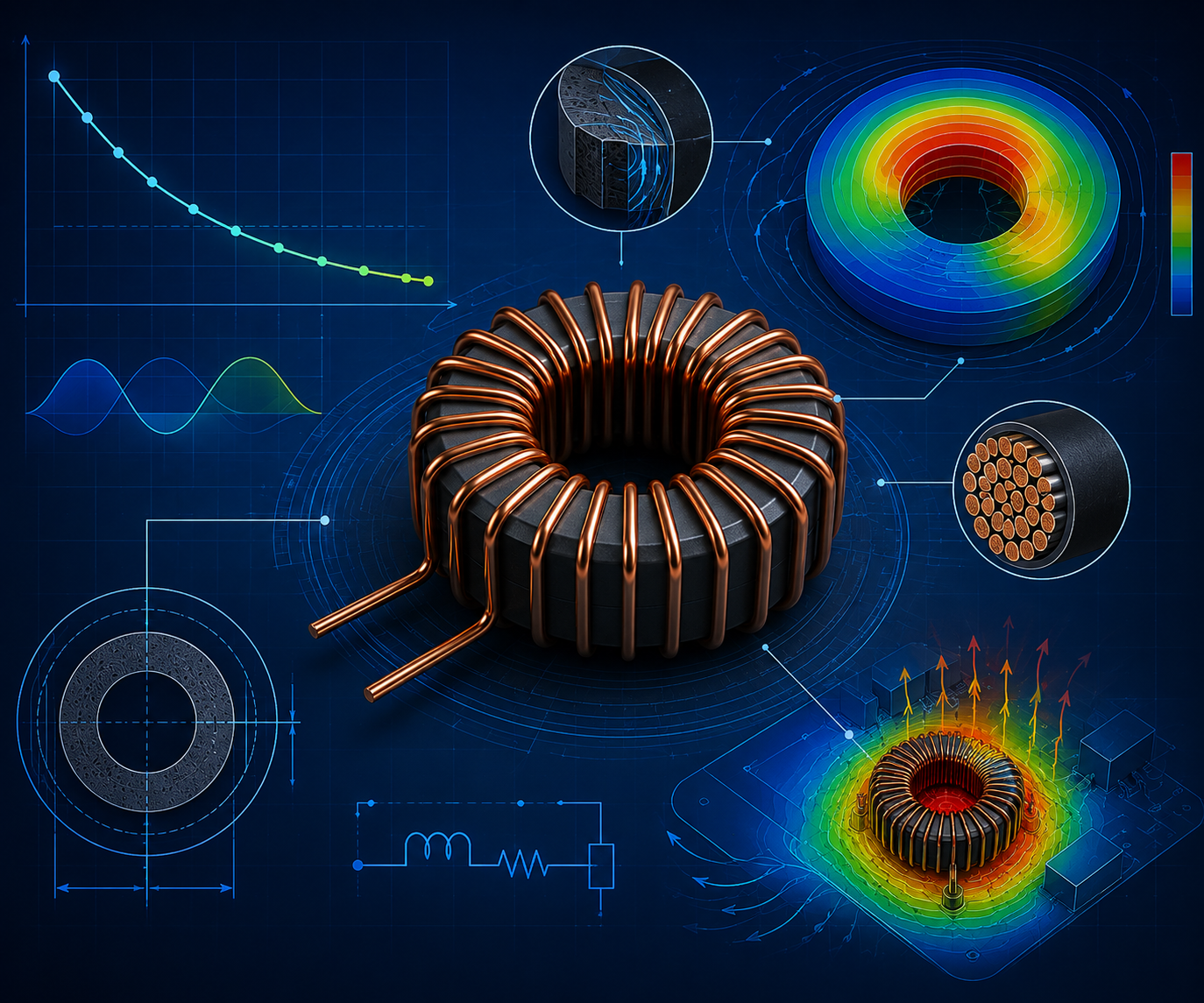
Two winding views
Validated baseline, with a practical multilayer comparison
The accepted baseline retains the controlled N × MLT calculation. A separate comparison estimates additional wire length, resistance and heating when all turns cannot occupy a single layer.
Baseline model
Maintains compatibility with the accepted calculation model and its validated reference cases.
- N × mean length per turn
- Primary copper loss
- Primary winding temperature
Multilayer estimate
Adds a manufacturability-oriented estimate without silently replacing the baseline.
- Layer count and remaining opening
- Longer wire and cold resistance
- Comparative loss and temperature
The multilayer result is an engineering estimate. Final construction still requires review of leads, insulation, winding placement, tolerances and measured cold DCR.
Where toroidal inductors work
Designed for real power-electronics decisions
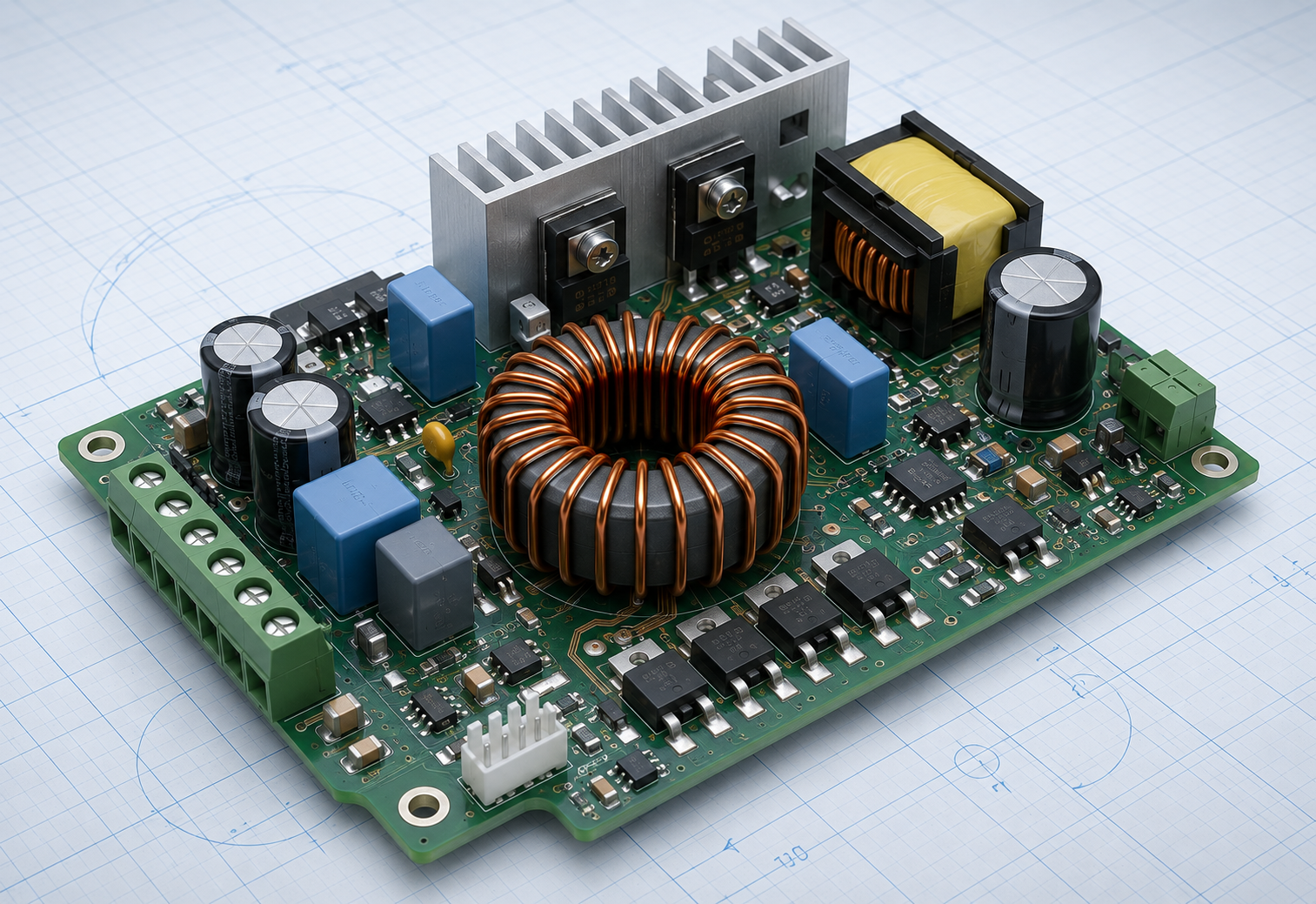
Power conversion
Energy storage and ripple control in DC/DC stages, converters and regulated supplies.
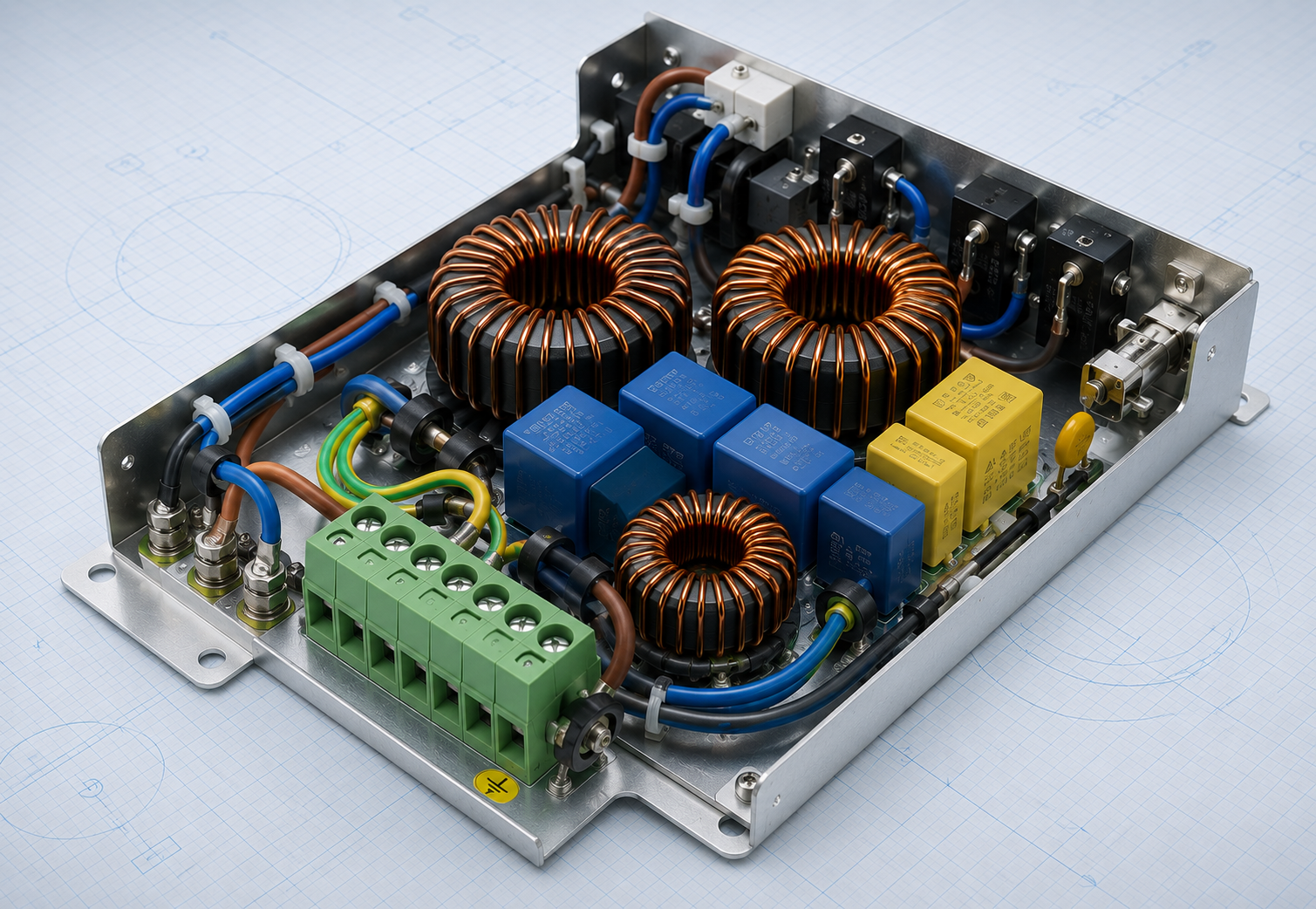
Filtering and energy conditioning
Inductive elements for current smoothing and engineered power-filter assemblies.
Prototype to measurement
Carry the trace ID and saved report from calculation into winding, inspection and later laboratory comparison.
Repeatable work
One calculation. One saved project. A result you can return to.
A logged-in account keeps the authoritative inputs and result together. Reopening an identical saved request, reviewing it and exporting it do not consume another calculation point.
- Immutable engineering snapshot
- Trace ID and version identity
- Readable HTML report
- Machine-readable JSON export
Engineering notes
Important before you calculate
The result supports engineering selection. It does not replace safety review, manufacturability checks or physical validation of the final assembly.
What is Btotal?
Btotal is the peak combined flux-density value under the calculator convention: Bdc + Bac. Bac alone is not the total maximum flux.
Can I force a particular core or wire?
Yes. Core and wire selection are independent. Manual mode validates the exact requested component and does not silently replace it.
Does the L(I) curve redesign the inductor at every current?
No. It evaluates the already selected physical construction with the same core, wire and integer turn count throughout the sweep.
Why can a completed request still be rejected?
A technically completed API request may return a domain rejection when geometry, magnetic, thermal or validated-data criteria are not satisfied. Candidate reasons and warnings explain the outcome.
ESTA · KRUŠEVAC, SERBIA
Start with requirements. Finish with evidence.
Open the authenticated calculator and create a reviewable toroidal-inductor project.
Engineering calculation aid based on controlled data and stated assumptions. Verify the final magnetic component under its actual electrical, thermal, mechanical and safety conditions.